


8 Massive Changes Impacting Leaders Worldwide
8 Massive Changes Impacting Leaders Worldwide
Leadership is changing at a pace that few could have predicted. The pressures faced by leaders are coming from all directions, and the skills that worked just a few years ago might not be enough for what’s happening today. With the ground constantly shifting beneath us, it’s more important than ever to adapt, to learn, and to plan for the unexpected.
Below are eight major changes that are reshaping leadership across the world and what you can do to stay effective through them all.
1. Artificial Intelligence: From Tool to Team Member
AI is no longer just a fancy add-on for writing emails or crunching data. It’s quickly becoming a full-fledged team member. These days, AI agents can complete tasks, recommend decisions, and even manage parts of business processes that used to be squarely in the hands of people. This brings up big questions for leaders: What should be left to AI? What must stay with humans? And most importantly, who is accountable when things go wrong?
The main issue isn’t simply, “How do we use AI?” It’s, “What decisions should never be handed to an AI?” As AI technology evolves, we see more of our businesses handed over to these systems. There are plenty of mundane tasks that should be left to AI, freeing up your time and resources. But leaders must set the boundaries. Someone needs to oversee the results, just as you would with any new employee.
You can’t simply let AI run wild.
It’s all too easy to fall for what’s now becoming known as “AI slot”—you read the first few lines of an AI-generated report, and it seems solid, so you send it off without reading the rest. Often, you find that the information further down is absolute rubbish. As leaders, we tend to trust that what we see at a glance is all there is, but we need to verify the details. AI, like any team member, has to earn its trust, and it should never be given the benefit of the doubt without oversight.
The challenge lies in learning what AI does well, what it can’t handle, and setting guardrails for its use. Many businesses are letting AI run free, without checks and balances. This puts you and your team at risk and makes it harder to maintain accountability. As this technology develops, it’s up to leaders to keep a close eye on the border between human and machine decision-making and to take charge of the outcomes.
2. Authority Shifts: From Position to Trust
In the past, leadership was seen as a position. If you had the title, you had authority, and people followed your instructions without question. That’s no longer the world we live in. Increasingly, employees judge leaders on their behaviour, transparency, competence, and on whether their actions match their words.
People watch everything you say and do. It’s not enough to be “in charge.” Trust is what gets people working together. In fact, recent research showed that 70% of people hesitate to trust someone with different values, facts, approaches, or cultural backgrounds. Leaders are now expected to bridge those gaps. You are no longer just managing, you’re brokering trust between diverse people.
Modern workplaces see people promoted beyond their skill level—what’s often called the Peter Principle. When a leader is known to be incompetent, but is still given a higher role, trust suffers across the board. As a leader, this puts even more pressure on you to build teamwork and bring people together, despite different backgrounds or perspectives.
Building trust isn’t easy and takes time. You must work to bring different people together and help them understand not just what to do, but why they're doing it. Trust is now the foundation of your authority—not your job title.
3. Facts No Longer Unite: Navigating Misinformation
One of the biggest challenges leaders face today is that people no longer always agree on the facts. We’re living in a world flooded by fake news, deepfakes, AI-generated misinformation, and endless social media squabbles. Shared reality is harder than ever to achieve.
Misinformation and disinformation now rank as some of the highest global risks. As a leader, you need to go beyond just accepting the information you’re given; you must verify it before acting, explain your sources, and be prepared to correct false claims without making things worse.
Situational awareness now means knowing whether the information you’re using to make decisions is even real. Don’t just trust what you hear, even if it comes from someone you respect. Take the time to fact-check with tools that cross-reference qualified sources. Websites like Skeptoid and Snopes, or specialised AI fact-checkers, can help you stay on track.
Without careful cross-checking, you could be heading down the wrong path very quickly. Falsehoods spread faster than ever, and as a leader, acting on bad information can derail your team and your goals. Make it part of your leadership practice to always confirm your sources before communicating or making decisions.
4. Geopolitical Conflict in Everyday Business
Events on the other side of the world now hit your business within days. Trade disputes, wars, tariffs, and shifting alliances have direct impacts on prices, supply chains, technology, and customer confidence. This is no longer something that only big international companies need to worry about—every business is affected.
With conflicts and crises dominating the news, leaders must keep a close eye on developing situations abroad, because they can suddenly disrupt the normal flow of your business. Even the best five-year plan won’t help you if it doesn’t include multiple backup strategies for sudden world events such as pandemics, wars, or global supply chain disruptions.
Recent years have shown us just how quickly everything can change. If you’re not planning for political risk and world events, you’re putting your organisation in danger. Be aware, stay informed, and have multiple fallback options to keep your business standing when the unexpected hits.
5. The Workforce Is Becoming Less Permanent
Long gone are the days of a job for life. Today’s leaders are managing a complicated mix of full-time staff, contractors, remote workers, specialists, older workers, younger workers, and even AI agents—all at the same time.
Skillsets shift quickly, and demographic changes lead to labour shortages in some fields and gluts in others. Technological advances, economic uncertainty, demographic change, and pressure to “go green” are all reshaping employment worldwide.
Basically, people don’t stay at one job for life anymore. Most young people don’t even expect to be with one company for long. Leaders will have to adapt to a workforce that is always shifting, working in different locations and with different priorities.
As you lead a team that’s a mix of employees and contractors, remember: initiative, loyalty, and commitment can’t be forced. Working with remote staff, balancing different work-life expectations, and keeping everyone on track gets trickier by the day, but being aware of these differences and managing them is the way forward.
6. Juggling Stability with Constant Change
Everyone wants certainty in their jobs, but leaders rarely have it themselves. Organisations are asked to move quicker than ever, but employees still need clear roles and boundaries. This balance between agility and stability is one of the hardest to strike.
Agility will be the main competitive strategy for most businesses, but stability remains an anchor. A good leader provides a stable process for dealing with the unknown. Using a simple approach—stop, assess, plan, act, and debrief—can help everyone manage ongoing chaos.
You won’t always have the answer. You will, however, be able to lead your team through uncertainty by being “the calm in the chaos.” Take care of your own mental and physical health, because everyone is looking to you for stability—even when you’re also struggling. Allow yourself the space to pause, recharge, and come back stronger.
7. Climate Change Demands Actionable Plans
It’s impossible to ignore that climate change is creating real operational problems. Extreme weather—heatwaves, floods, fires, and storms—disrupts workplaces, communities, supply chains, and puts employee safety at risk.
The hottest years ever recorded have been recent ones, with unprecedented weather events happening everywhere. This isn’t just a government problem anymore—every leader needs to plan for extreme events. Continuity plans, alternative suppliers, backup communications, energy sources, and crisis procedures are all essential.
For instance, when power goes out, having solar and battery backup or generators in place can keep your business running. With supply chains disrupted by natural disasters, having alternative plans is a must. These issues affect every business in some way, so leaders can’t just hope for the best—they need to prepare for the worst.
8. Decision-Making Moves to the Front Line
Traditional businesses moved decisions up the chain for approval. In today’s fast-moving world, that’s too slow. As change accelerates, leaders must empower those closer to the problem to act within set boundaries.
This doesn’t mean giving up command; it means creating clear intent, defining responsibilities, and trusting others to make good choices. On the fireground, for instance, one leader might oversee five to seven people or teams. Any more, and control becomes impossible. It’s the same for any business or organisation—break down your teams, give them autonomy, and let them make calls on the spot.
Letting go is the toughest part. You can’t control every decision below you, and micromanaging simply won’t work. If you've set clear expectations and given proper training, your frontline leaders will make safe, smart decisions when needed.
Are You Changing Fast Enough?
The world isn’t waiting. These shifts are already changing how people work, think, trust, and make decisions. The key question is not if leadership must change, but if you’re changing fast enough to lead in this new world. Prepare your team for the world they’re facing today—not the world that’s already disappeared.
True leadership now demands adaptability, vigilance, and a willingness to face ongoing change with a steady hand. Whether it’s dealing with technology, trust, truth, world events, workforce shifts, stability, climate threats, or decentralised decisions—leadership has never been more in the line of fire. And that’s exactly where the best leaders shine.
YOU MIGHT LIKE

Become a Better Leader Every Day!
Want the latest leadership stories, tips and ideas to help you grow delivered to your inbox?
POPULAR VIDEOS

By Brad Hauck
By Brad Hauck
LATEST VIDEO PODCAST EPISODE
ABOUT THE PODCAST
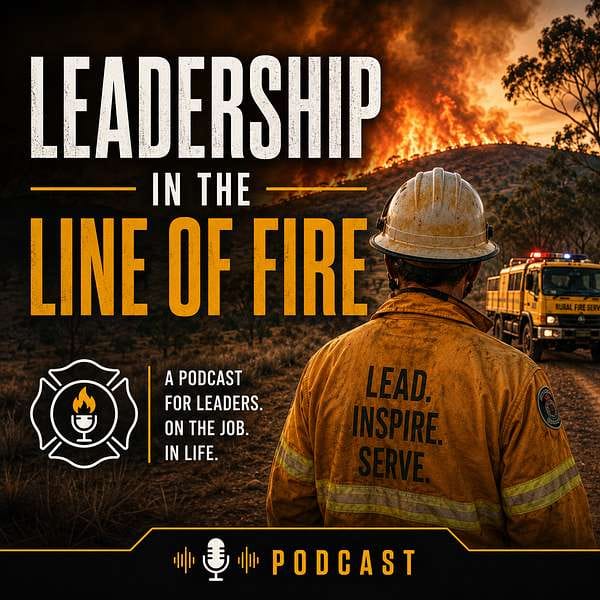
A podcast for leaders under pressure. Real stories, hard-earned lessons and practical frameworks from the fireground and beyond on how to stay calm, make better calls and lead well when the heat is on.


Created by Brad Hauck