


Unplanned Leadership Moments: The 5 Decisions That Define You
There is a moment in leadership that no training room or textbook can ever truly prepare you for. It’s that instant when something unexpected happens—the plan becomes useless, the boss is nowhere to be found, and suddenly, every pair of eyes is focused on you, waiting to see who will step up. Whether on the fireground facing a raging bushfire or in a busy office when an urgent crisis lands in your lap, this is when true leadership is revealed.
These are unplanned leadership moments. They don’t care about your job title, your seniority, or whether someone officially made you the boss that day. They simply arrive, testing whether you’ve been trained to think and act or simply to follow orders and wait.
What Are Unplanned Leadership Moments?
Unplanned leadership moments are those times that arise unexpectedly. On the fireground, these could be a wind suddenly changing direction, a missed radio message, a spot fire breaking out where it shouldn’t, or a team realising that their previously safe escape route has vanished. In business, it might be a furious client, a failing system, or a major staff issue. What they all have in common is this: the person who usually calls the shots is not available, and someone has to lead.
The core challenge isn’t the situation itself—it’s what you do next. Do you step forward, or do you freeze? Real leaders emerge when the plan suddenly doesn’t fit and someone needs to guide the team through uncertainty.
In these moments, the next decision really matters. Let’s explore the five key decisions you’ll face when those unplanned moments happen and how you can handle them.
Decision 1: Do I Wait or Do I Act?
When the boss isn’t around, many people freeze. They become paralysed, waiting for permission—even when the situation is rapidly changing. On the fireground, that delay can have dangerous consequences. If the wind shifts, the smoke thins, or the radio goes silent, there might be only seconds to act. In business, if the staff wait for a manager before addressing a client issue or fixing a delivery problem, the risk can escalate quickly.
It’s important to realise that waiting is a decision too—and not always the right one. The more useful question is: do you have enough information to make a safe and useful decision right now?
Sometimes, stepping up is simply about getting the conversation started. Even if you’re not the most senior person in the room, there are times when it’s smarter to lead rather than wait. If you step up and help the team make a call—even a temporary one—you can always hand over to someone else when they’re ready. But letting everyone wait in limbo is a bigger risk.
Leadership often comes down to acting within the right timeframe. Making a timely decision isn’t just about being decisive; it’s about stopping small problems from quickly growing into bigger ones. Remember: when a decision needs to be made, there’s only so much time to do it. Letting that window close can turn a small issue into a major disaster.
Decision 2: What’s Our Mission?
When making decisions in a crisis, it’s tempting to get caught up in the details or default to ‘just do something’. But good decisions are always grounded in the mission. The mission gives you direction, even if the plan falls apart.
On the fireground, the mission might be to hold the containment line or protect a specific structure. The situation will change, but the mission gives the team clarity on what needs to be achieved. In business, the mission could mean protecting client relationships, keeping a project moving forward, or preventing small issues from spiraling out of control.
If you can’t remember the mission, stop and look it up or ask. As a leader, it’s just as important to explain the intent behind instructions as it is to spell out the specific tasks. Instead of just telling people what to do, tell them what you’re trying to achieve. That way, even if you step out, the team still has a guiding star to follow when the situation changes.
Why is this vital? Because if people know the mission, they can adapt the plan in real time. In the fire service, there’s a process called SMEARCS (Situation, Mission, etc.) which separates what’s happening from what needs to be achieved. If you have clarity on both, it’s easier to make smart decisions under pressure.
Decision 3: What Are the Safety Limits?
Every leadership decision must be made within certain boundaries, and the most important of these is safety. Not every decision needs to be about winning—sometimes the best call is to pull back. On the fireground, there are strict safety protocols such as LACES (Lookouts, Awareness, Communication, Escape routes, and Safety zones) to ensure no one takes unnecessary risks. If any one of these collapses, the leadership call must change instantly.
In business, safety might look different but is just as essential. It could be about legal risks, mental health, financial exposure, the risk of losing customer trust, brand damage, or team burnout. Leaders need to know exactly where the ‘hard lines’ are—what’s negotiable and what’s not.
For example, when helping a customer, you can offer creative solutions, but you should never lie to them. If you burn your team out to meet a deadline, you might get there once—but you’ll lose effectiveness in the long run. Fatigued people make mistakes, and mistakes at the wrong time can be catastrophic.
Good leaders act with courage, but not recklessness. Safety isn’t about avoiding all risks; it’s about managing and understanding where the absolute boundaries are.
Decision 4: Who Needs to Know?
Making leadership decisions in a crisis doesn’t mean going it alone or keeping secrets. Unplanned leadership still demands strong communication.
You might not be able to update everyone before acting, but it’s vital to do so as soon as possible afterwards. In a fire scenario, this could mean quickly communicating with sector commanders or crew leaders. In business, it means looping in your team leader, manager, or whoever oversees your area.
This is a common area where people stumble—they make a decision in good faith, but fail to keep others in the loop. This creates confusion and can lead to misunderstandings or even undo good work. It’s important that your team and your leadership know what changes were made and why.
Sometimes, all it takes is a quick update: “The conditions changed, the crews are safe, and we’re awaiting further instructions.” Or perhaps: “The client was about to cancel, so I offered a temporary fix within our guidelines. I’ll explain when you have a moment.”
Act when you need to, but always communicate up and down the chain as quickly as you can.
Decision 5: What Did We Learn From This?
The final leadership decision happens after the event. This is where you decide whether the crisis becomes just another story—or a valuable lesson for the team.
Debriefing is key. Take time to look back and reflect: What happened? What decisions were made? What information did you have? What worked, and what should change next time?
In firefighting, standard post-incident debriefs ask three simple questions: “What went well?”, “What didn’t go so well?”, and “What could we do better next time?” The focus isn’t on blame or fault-finding, but on honest reflection so the entire team can grow.
Even if the decision made wasn’t perfect, it was likely the best one possible based on the information available at the time. By looking at what worked and what didn’t, you build smarter leaders and stronger teams. This isn’t a solo exercise—it should happen with your whole team. Encouraging everyone to reflect openly builds trust and drives improvement.
In businesses that foster this, each unplanned leadership moment becomes training. Without it, mistakes become bad habits.
Building Real Leaders, Not Just Followers
Unplanned leadership moments reveal the true strength of your team. When the boss isn’t there and things go off-script, people either wait for permission—or they step up and act with the best information and intentions.
That’s why leaders must train their teams not only to follow plans, but to understand missions, safety limits, quick communication, and honest debriefs. If your people can only lead when you’re shoulder to shoulder with them, you haven’t built leaders—you’ve built followers.
When the next unplanned moment comes, ask yourself: Will you step up and act, or will you wait? The choices you make in those key moments are what define you as a leader.
YOU MIGHT LIKE

Become a Better Leader Every Day!
Want the latest leadership stories, tips and ideas to help you grow delivered to your inbox?
POPULAR VIDEOS

By Brad Hauck
By Brad Hauck
LATEST VIDEO PODCAST EPISODE
ABOUT THE PODCAST
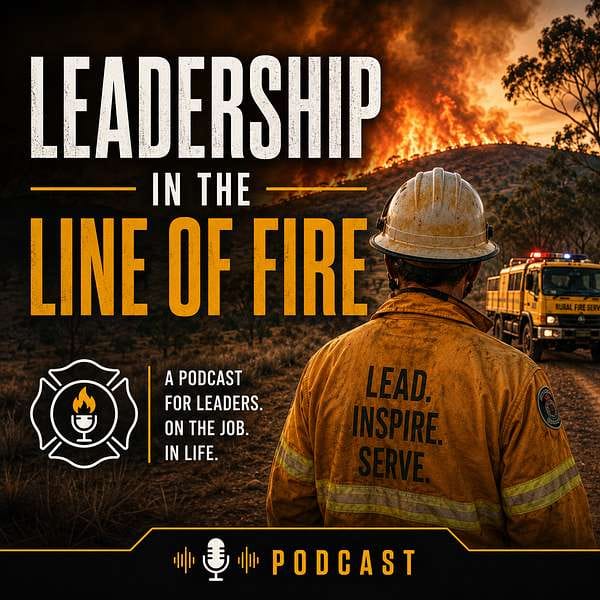
A podcast for leaders under pressure. Real stories, hard-earned lessons and practical frameworks from the fireground and beyond on how to stay calm, make better calls and lead well when the heat is on.


Created by Brad Hauck